The Tri-State Move-Out Cleaning Checklist: What Actually Gets Your Deposit Back
The Tri-State Move-Out Cleaning Checklist: What Actually Gets Your Deposit Back
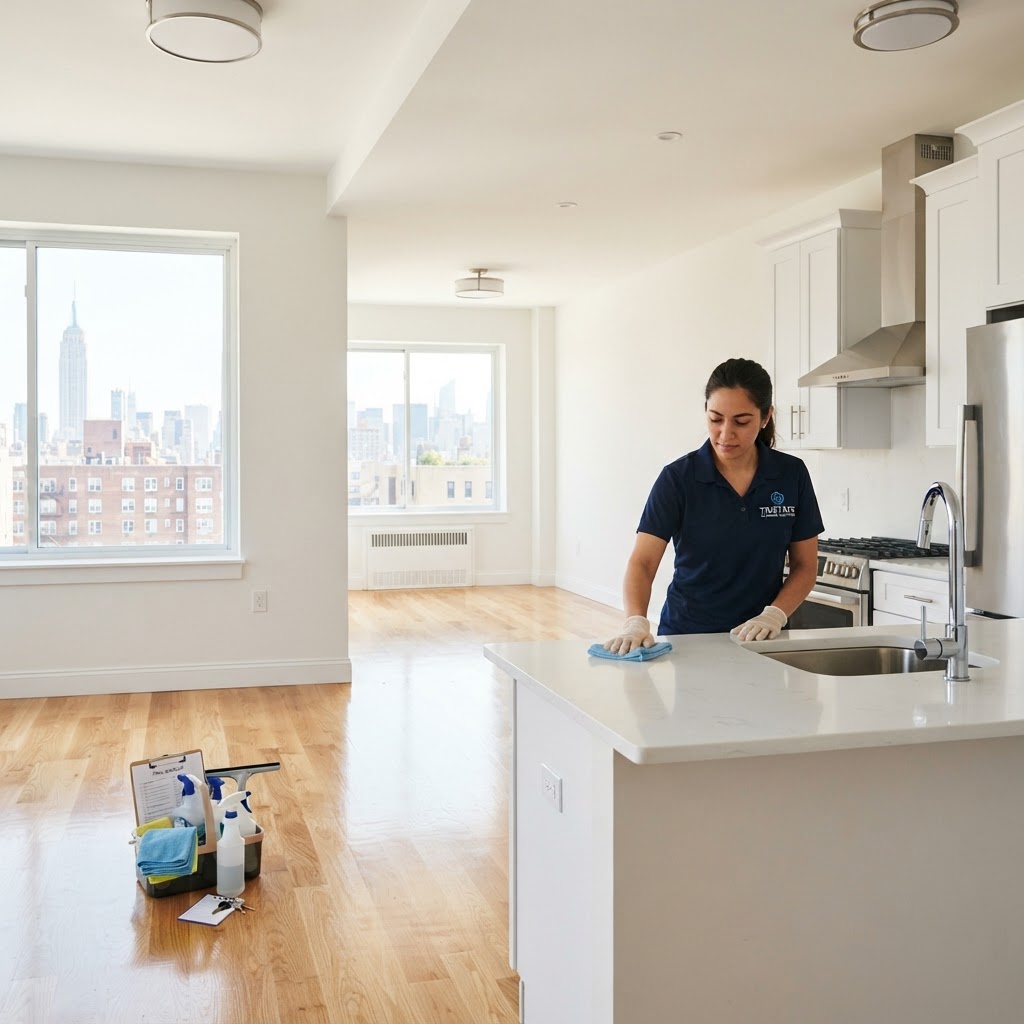
I have watched more Tri-State move-outs than I can count, and the pattern almost never changes. People spend six weeks agonizing over the moving company and roughly forty minutes thinking about the cleaning. Then the deposit comes back light, and the itemized deduction says something maddeningly vague like "cleaning and restoration."
The deposit fight is winnable. It is mostly a documentation game and a sequencing game, and both of those are decided weeks before you hand over the keys.
Here is how it actually works on both sides of the Hudson.
First, Know What Your State Requires of Your Landlord
New York and New Jersey handle security deposits differently, and knowing your side of the river changes your leverage. (This is general information, not legal advice — if you are in a real dispute, talk to a tenant attorney or your local housing court's help center.)
New York
Since the 2019 Housing Stability and Tenant Protection Act, New York landlords generally must return a security deposit within 14 days of a tenant vacating. If deductions are taken, the landlord must provide an itemized statement describing the basis for each one. Miss that deadline and the landlord may forfeit the right to keep any portion of the deposit.
New York also caps most residential security deposits at one month's rent, and tenants are entitled to request a walkthrough inspection both before move-in and before move-out, with the right to be present.
That pre-move-out walkthrough is the most underused tool in New York tenancy. It gives you a written statement of what the landlord intends to charge for — before you move out, while you still have time to fix it. Request it in writing.
New Jersey
Under New Jersey's Rent Security Deposit Act, landlords generally must return the deposit with accrued interest within 30 days of the end of the tenancy, along with an itemized list of deductions. Deposits are capped at one and a half months' rent, and landlords are required to hold them in an interest-bearing account and notify tenants where.
New Jersey has real teeth here: a landlord who wrongfully withholds a deposit can be liable for double the amount wrongfully withheld, plus court costs. That statute is why New Jersey deposit disputes tend to settle faster than New York ones.
"Normal Wear and Tear" Is the Whole Ballgame
Neither state permits a landlord to charge you for ordinary deterioration from living in a place. The dividing line is roughly this:
Normal wear and tear (not chargeable):
- Faded or slightly scuffed paint after a multi-year tenancy
- Minor nail holes from hanging pictures
- Worn traffic paths in carpet
- Loose grout, minor caulk shrinkage
- Faded finish on hardwood in walking lanes
- Small scratches on countertops from ordinary use
Damage or neglect (chargeable):
- Grease buildup on kitchen cabinets and range hood
- Soap scum and mineral crust in the tub and on shower doors
- Pet odor and staining in flooring
- Large holes, anchors left in walls, unauthorized paint colors
- Burns, deep gouges, cracked tile
- Mold from unaddressed leaks or lack of ventilation
- Trash and belongings left behind
Read that second list closely. Almost every item on it is a cleaning issue, not a repair issue. That is why the cleaning is the deposit.
The Building Will Slow You Down More Than the Cleaning Will
If you are moving out of a New York City co-op, condo, or managed rental building, the building itself imposes a schedule you do not control:
- Certificate of insurance. Most buildings require your movers to submit a COI naming the building and managing agent as additional insured, often days in advance. Your cleaning company may need one too. Ask early — this is the most common cause of a move-day disaster.
- Elevator reservations. Typically restricted to weekday business hours, often 9 AM to 4 PM, sometimes with a refundable deposit. Weekend moves are prohibited in many buildings.
- Freight entrance rules. Some prewar buildings have no service elevator at all. If you are on the fourth floor of a Bay Ridge or Washington Heights walk-up, your movers know this and your cleaners need to.
North Jersey has its own version. Hoboken and Jersey City require moving permits and metered-space reservations on many streets, and the parking situation on a Hoboken side street in late May — peak lease turnover — is not something to improvise.
Build your calendar around the building's rules, then fit the cleaning into what is left.
The Four-Week Timeline
Four weeks out: Request your pre-move-out inspection (NY). Pull out your lease and reread the surrender clause — some leases specify "professionally cleaned" or "broom clean," and those mean different things. Book your cleaning now; late May, late August, and the last weekend of any month are the busiest windows in this market.
Two weeks out: Patch nail holes and let compound cure. Order any replacement items — light bulbs, blinds slats, refrigerator shelves, cabinet hardware. Start using up cleaning supplies and pantry items rather than moving them.
Move day: Everything out. Every closet, every cabinet, the storage cage in the basement, the shelf above the coat closet that you forgot existed.
Day after move-out: Clean the empty unit. This is the sequence that matters — cleaning an empty apartment takes a fraction of the time and produces a dramatically better result than cleaning around boxes. Cleaning before the furniture leaves is wasted money.
Final walkthrough: Photograph everything with timestamps before you surrender the keys.
The Room-by-Room Checklist
Kitchen
This is where the majority of deductions originate.
- Inside, outside, and underneath the refrigerator — pull it out
- Inside the oven, including the racks, the broiler drawer, and the door glass
- Range hood filter, degreased or replaced
- Behind and under the stove
- Inside every cabinet and drawer, plus the tops of upper cabinets
- Dishwasher interior, filter, and door gasket
- Sink, faucet, and drain; descale the aerator
- Backsplash grout
- All small appliance grease on wall surfaces near the range
Bathrooms
- Tub, shower walls, and door tracks — mineral scale removed, not just wiped
- Toilet including the base, the bolts, and behind the tank
- Grout and caulk lines
- Exhaust fan cover, vacuumed and washed
- Mirror, medicine cabinet interior, vanity interior
- Under-sink cabinet, including any water staining
Floors
- Vacuum, then mop with product appropriate to the substrate
- Corners and edges where vacuums do not reach
- Under where the furniture was — dust lines are obvious to an inspecting agent
- Carpet: professional extraction if there were pets, full stop
Windows, Sills, and Radiators
The Tri-State specialty. Urban windowsills accumulate black particulate continuously — brake dust, tire wear, and combustion soot. In a Bronx or Long Island City apartment near a highway, a sill can look neglected within a week of being wiped.
- Interior glass, frames, and tracks
- Sills scrubbed, not just dusted
- Window guards: in New York City, buildings with children under 11 are required to have window guards installed, and they stay. Do not remove them.
- Radiator fins vacuumed and wiped, plus the wall shadow above them
- Blinds and shades wiped slat by slat
Closets, Doors, Walls
- Closet shelves, rods, and floors
- Door tops — an inspector will run a finger there
- Light switches and outlet plates
- Baseboards throughout
- Scuffs on walls, gently, with a non-abrasive method
- All light fixtures, including bulbs replaced and glass shades washed
The Last Ten Minutes
- Every light bulb working
- Smoke and carbon monoxide detectors present with fresh batteries — in New Jersey, a smoke detector and CO alarm compliance certificate is required for most residential resales and many rental turnovers
- Balcony or fire escape swept
- Trash removed from the property entirely, not left in the building's bins
- Keys, fobs, mail keys, garage remotes, and any building amenity cards accounted for
Regional Quirks Worth Knowing
Prewar New York
Parquet and original strip hardwood are common and easily damaged. Do not saturate them — a barely damp mop only, and never a steam mop. Original hex tile in prewar bathrooms responds well to an alkaline cleaner and a brush, but the grout is often original and porous; scrub firmly and do not use acid on it. Plaster walls do not patch like drywall; if you have a large hole, get it done properly.
North Jersey Two-Families and Colonials
Older Essex and Union County housing stock frequently has basement laundry areas, detached garages, and finished attics — all of which count as part of the demised premises and all of which get forgotten. Check the lease for who is responsible for gutters, the driveway, and the yard. Many North Jersey leases push all three to the tenant.
Document Everything
Photograph or video the entire unit after cleaning and before surrendering keys. Timestamped, well lit, every room, every appliance interior, every floor. Email the file to yourself so there is a dated record.
Compare it against your move-in documentation. If you do not have move-in documentation, take this as the lesson: the first thirty minutes in a new apartment should be spent photographing it.
Then put your forwarding address in writing to the landlord. In both states, a landlord's obligations run to the address you provide. Failing to provide one is the easiest way to hand them a defense.
Moving out this season? Don't gamble the deposit.
Lunexa Cleaning Co. handles move-in and move-out cleaning across all five NYC boroughs and Northern New Jersey — Jersey City, Hoboken, Bayonne, Newark, and communities throughout Hudson, Essex, Bergen, Union, Passaic, and Middlesex counties. We work empty units, we can provide a certificate of insurance for your building, and we know what a managing agent looks for.
Flat published pricing with no in-home estimate. Book your move-out clean on our booking page, or start a chat here and tell us your move date — the last week of the month books out fastest.